
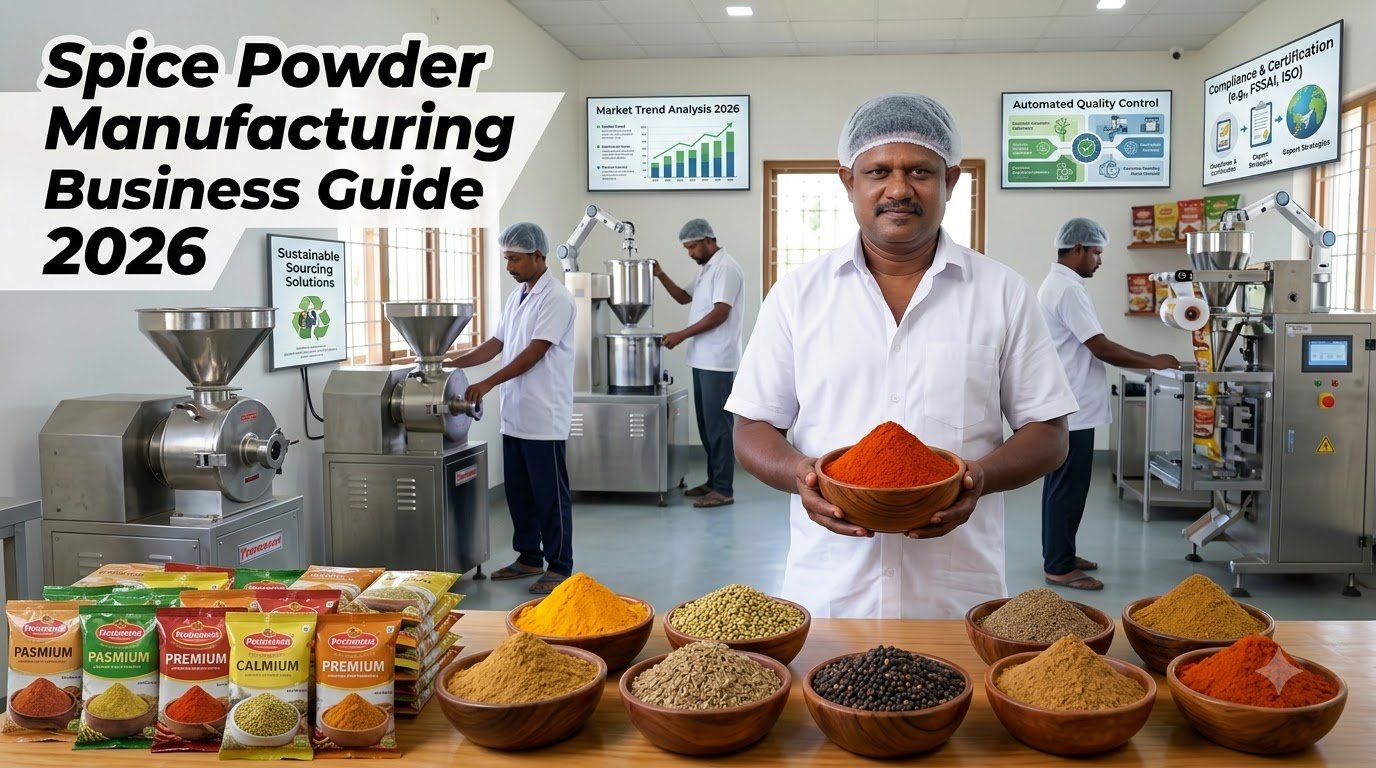
The spice powder manufacturing business is one of the most profitable and evergreen food processing industries in India. Spices such as chili powder, turmeric powder, coriander powder, cumin powder, pepper powder, sambar powder, rasam powder, garam masala, biryani masala, and chicken masala are essential ingredients in almost every Indian kitchen.
As the demand for quality spices continues to grow in domestic and international markets, starting a spice powder manufacturing business can be an excellent opportunity for aspiring entrepreneurs. With proper planning, quality production, and effective marketing, this business has the potential to grow into a successful and recognizable brand.
Why Start a Spice Powder Manufacturing Business?
There are several reasons why this business is considered a profitable venture:
- High and consistent demand throughout the year.
- Essential household product with regular repeat customers.
- Can be started with relatively low investment.
- Suitable for small-scale, medium-scale, or large-scale production.
- Opportunity to build your own brand.
- Easy distribution through retail stores, supermarkets, wholesalers, and online platforms.
- Strong export potential for premium-quality spices.
Popular Spice Products You Can Manufacture
A spice manufacturing unit can produce a wide range of products, including:
- Chili Powder
- Turmeric Powder
- Coriander Powder
- Cumin Powder
- Black Pepper Powder
- Garam Masala
- Sambar Powder
- Rasam Powder
- Biryani Masala
- Chicken Masala
- Mutton Masala
- Curry Masala
- Kitchen King Masala
- Chaat Masala
- Idli Podi
- Mixed Spice Blends
Diversifying your product range helps attract different customer segments and increases revenue.
Raw Materials Required
The quality of your finished product depends on the quality of raw materials. Common ingredients include:
- Dry Red Chilies
- Turmeric Fingers
- Coriander Seeds
- Cumin Seeds
- Black Pepper
- Fennel Seeds
- Fenugreek Seeds
- Cloves
- Cardamom
- Cinnamon
- Bay Leaves
- Nutmeg
- Mace
- Curry Leaves (for selected blends)
Purchase raw materials from reliable farmers, agricultural markets, or certified suppliers.
Machinery Required
Depending on your production capacity, the following machinery may be required:
- Spice Grinding Machine
- Pulverizer Machine
- Roasting Machine
- Cleaning Machine
- Vibro Sieve Machine
- Ribbon Blender
- Digital Weighing Scale
- Pouch Sealing Machine
- Automatic Packing Machine
- Labeling Machine
Automation can improve productivity and product consistency as your business grows.
Manufacturing Process
Step 1: Procurement
Purchase high-quality raw spices from trusted suppliers.
Step 2: Cleaning
Remove dust, stones, damaged spices, and other impurities.
Step 3: Drying
Ensure spices are completely dry to reduce moisture and extend shelf life.
Step 4: Roasting (Optional)
Light roasting enhances aroma and flavor for selected spice blends.
Step 5: Grinding
Grind spices into fine powder using industrial grinding equipment.
Step 6: Sieving
Use sieving machines to obtain a uniform particle size.
Step 7: Blending
Mix different spices according to standardized recipes for blended products.
Step 8: Packaging
Pack products in moisture-proof, food-grade pouches or containers.
Step 9: Labeling
Include product name, ingredients, net weight, manufacturing date, expiry date, batch number, storage instructions, and manufacturer details.
Investment Required
The investment depends on the production scale.
- Small-scale unit: ₹2 lakh–₹5 lakh
- Medium-scale unit: ₹5 lakh–₹15 lakh
- Large-scale unit: ₹15 lakh and above
Costs generally include machinery, raw materials, packaging materials, workspace, licenses, branding, and working capital.
Licenses and Registrations
Before starting the business, obtain the necessary approvals, which may include:
- FSSAI License
- UDYAM Registration (for MSMEs)
- GST Registration (if applicable)
- Trade License
- Factory License (if required)
- Trademark Registration (recommended for brand protection)
Requirements vary depending on the size and nature of the business.
Packaging and Branding
Attractive packaging plays a crucial role in customer purchasing decisions.
Your packaging should:
- Be food-grade and moisture-resistant.
- Clearly display the brand name.
- Include nutritional and product information where applicable.
- Feature an appealing design.
- Build trust through quality and consistency.
A strong brand identity helps create customer loyalty.
Marketing Strategies
You can market your products through:
- Grocery Stores
- Supermarkets
- Wholesale Distributors
- Hotels and Restaurants
- Catering Services
- Online Marketplaces
- Your Own Website
- WhatsApp Business
- YouTube Product Demonstrations
Offer free samples, introductory discounts, and retailer incentives to increase market penetration.
Sales Opportunities
There are multiple sales channels available:
- Local Retail Stores
- Modern Trade Chains
- Food Distributors
- Institutional Buyers
- Export Markets
- Direct-to-Consumer Online Sales
Expanding into multiple channels reduces business risk and increases revenue.
Government Support
Depending on eligibility and prevailing government guidelines, entrepreneurs may explore government-supported schemes such as UYEGP and PMEGP to assist with financing a new manufacturing business. Applicants should always verify the latest eligibility criteria and application procedures with the relevant authorities before applying.
Tips for Success
- Source premium-quality raw materials.
- Maintain strict hygiene standards.
- Follow consistent production processes.
- Invest in attractive packaging.
- Focus on customer satisfaction.
- Build a recognizable brand.
- Use digital marketing to reach new customers.
- Continuously improve product quality based on customer feedback.
- Keep accurate financial records.
- Expand your product line gradually.
Challenges
Some common challenges include:
- Fluctuating raw material prices.
- Competition from established brands.
- Maintaining consistent quality.
- Building dealer and distributor networks.
- Managing inventory efficiently.
Proper planning and quality management can help overcome these challenges.
PDF download link
Conclusion
The spice powder manufacturing business offers an excellent opportunity for entrepreneurs seeking a profitable and sustainable venture. With growing consumer demand, relatively low entry barriers, and the potential to develop a trusted brand, this industry provides significant long-term growth opportunities. By focusing on quality, hygiene, attractive packaging, effective branding, and strong distribution, entrepreneurs can establish a successful spice manufacturing business that serves local, national, and even international markets.