
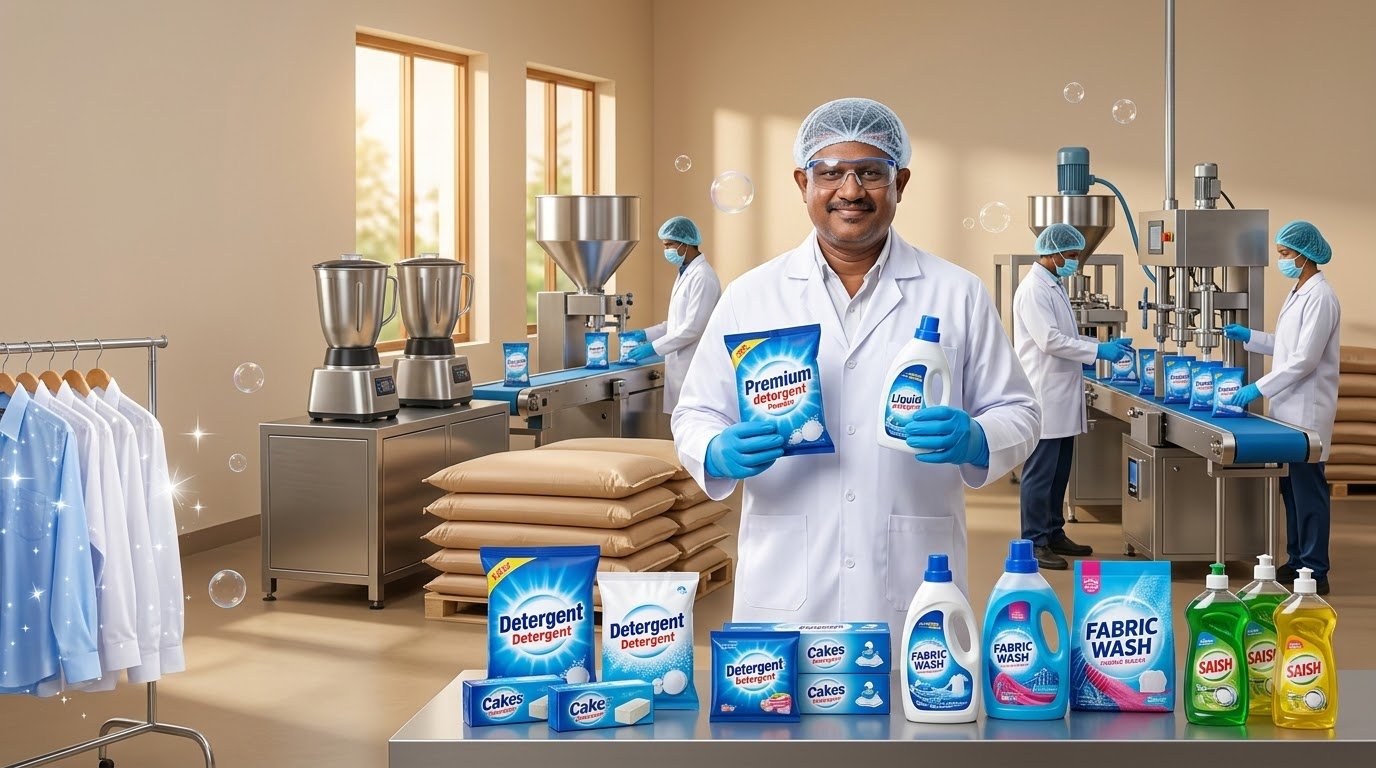
Detergent Manufacturing Business – A Complete Guide to Starting a Profitable Business with Low Investment
The detergent manufacturing business is one of the most promising and profitable industries in the home and personal care sector. Detergent products such as detergent powder, detergent cakes, and liquid detergents are essential cleaning products used daily in households, hotels, hospitals, commercial laundries, industries, and institutions.
With consistent demand throughout the year, this business offers excellent opportunities for entrepreneurs. By maintaining high product quality, attractive packaging, and an effective marketing strategy, a small-scale detergent manufacturing unit can grow into a successful and recognized brand.
Why Start a Detergent Manufacturing Business?
There are several reasons why detergent manufacturing is an attractive business opportunity:
- Year-round market demand.
- Essential household product with repeat customers.
- Can be started with relatively low investment.
- Good profit potential.
- Opportunity to build your own brand.
- Strong demand in both urban and rural markets.
- Suitable for retail, wholesale, and institutional sales.
Products You Can Manufacture
A detergent manufacturing business can produce a wide range of cleaning products, including:
- Detergent Powder
- Detergent Cake
- Laundry Detergent
- Liquid Detergent
- Front Load Washing Machine Detergent
- Top Load Washing Machine Detergent
- Baby Clothes Detergent
- Industrial Detergent
Expanding your product range can help increase your customer base and revenue.
Raw Materials Required
The exact ingredients vary depending on the product formulation and intended performance. Common raw materials include:
- Surfactants
- Soda Ash
- LABSA (Linear Alkyl Benzene Sulphonic Acid)
- Sodium Sulphate
- Sodium Silicate
- Optical Brightener
- Perfume
- Color
- Enzymes (optional)
- Anti-Redeposition Agents
Note: The formulation should be developed with proper technical expertise. Safe handling procedures and quality standards should always be followed.
Machinery Required
The machinery required depends on the production capacity and level of automation. Common equipment includes:
- Ribbon Blender
- Powder Mixer
- Pulverizer (if required)
- Digital Weighing Machine
- Pouch Sealing Machine
- Automatic Packing Machine
- Batch Mixer
- Storage Tanks (for Liquid Detergent)
As production increases, automation can improve efficiency and consistency.
Manufacturing Process (General Overview)
1. Raw Material Procurement
Purchase high-quality raw materials from trusted suppliers to ensure consistent product quality.
2. Mixing
Mix the ingredients in the required proportions using suitable blending equipment until a uniform mixture is obtained.
3. Quality Testing
Test the product for cleaning performance, foam generation, consistency, moisture content, and overall quality.
4. Packaging
Pack the finished products in moisture-resistant packaging in different sizes such as 100 g, 500 g, 1 kg, and 5 kg.
5. Labeling
The label should include:
- Brand Name
- Product Name
- Net Weight
- Manufacturing Date
- Batch Number
- Usage Instructions
- Safety Information
- Manufacturer Details
Investment Required
The investment depends on the production capacity and automation level.
- Small-scale unit: ₹3 lakh–₹5 lakh
- Medium-scale unit: ₹5 lakh–₹15 lakh
- Larger units may require higher investments.
Major expenses include machinery, raw materials, packaging materials, workspace, branding, licenses, and working capital.